
How to Grow New Food from Food Scraps
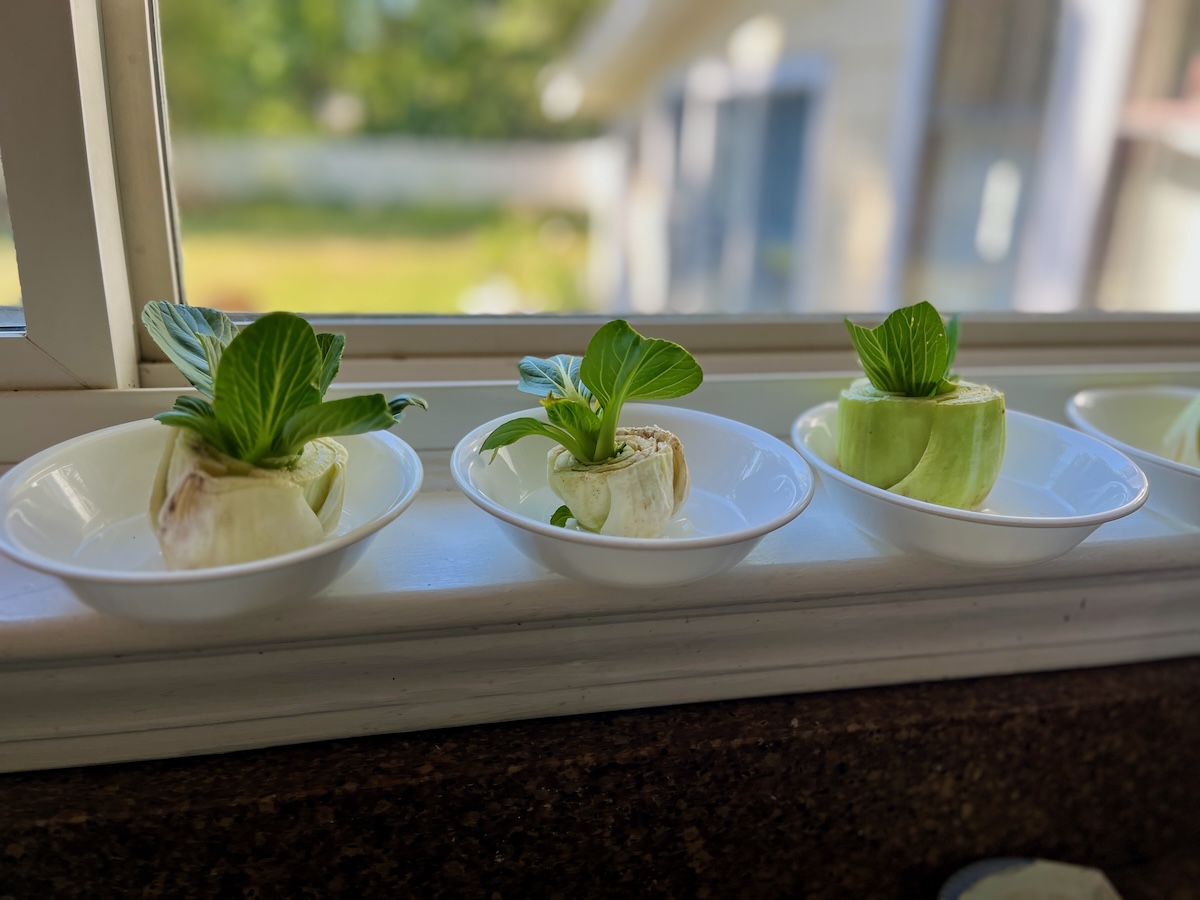
Ever since I learned how to grow new food from kitchen scraps I might have thrown away, I never compost the root of certain vegetables before trying to grow new ones. This all became top of mind during the pandemic, when getting to the grocery store wasn’t easy. Years later we’re still doing it, successfully regrowing celery, lettuce, boy choy and more. Read on for how you can do this, too. It’s a great, frugal, money-saving hack.
How to Regrow Vegetables
This page may contain affiliate links, which means I may be compensated if you click a link. However, there is no cost to you. Also, as an Amazon Associate, I earn from qualifying purchases. For more info, please see my Privacy and Disclosure page.
In most instances, water is the crucial ingredient for growing new veggies. If you’ve ever propagated a plant, you’ll understand water’s role here. That’s not just me saying that. According to Better Homes and Gardens, putting food scraps in water is vital for growing new roots. Here are a couple of reasons why.
Consistent Hydration
Water keeps plant cuttings or scraps consistently hydrated, and this steady moisture supply plays a crucial role in root development. Soil often dries out quickly if you don’t monitor it closely, but water maintains a constant level of hydration and prevents stress on the plant.
Oxygen Availability
Water propagation creates an environment where oxygen surrounds the root zone, and roots can grow effectively when they access this oxygen. If you change the water regularly, you refresh the supply and ensure that the balance of oxygen remains available.
Nutrient Uptake
Water doesn’t contain nutrients on its own, yet it enables the initial uptake of moisture that plants need to begin root development. Once the roots form, you can transfer the plant into nutrient-rich soil, and it will continue to grow stronger.
Easy to Monitor
Water propagation makes it easy for you to monitor root growth, and you can watch the roots form without disturbing the plant. For instance, when I’m regrowing bok choy or lettuce on my sunny kitchen windowsill, it is easy for me to peek into the container to see if roots are showing.
Healthier Plants
By not putting the plants directly in the ground, you reduce the chances of soil-borne diseases and pests. So you’re giving your delicate new roots a cleaner environment to establish itself.
Grow from Your Compost Bin
Another way we learned to grow new food from scraps was really by accident. Bill built some raised garden beds, and I filled it with compost from our bin. However, not all of the food scraps in the compost had broken down into legit soil yet. In fact, there were quite a few pieces of potato still in the compost. They were taking longer to decompose than I’d expected.
Fast forward a few months, and suddenly we had potato plants sprout among the tomatoes and cucumbers we’d planted in that raised bed. So now we knew that if your potatoes had started to sprout, you could put them in the ground like you would a seed to get a new potato shoot.
We’ve had the same thing happen with pumpkin seeds and butternut squash guts. While technically not growing new plants in the water method, we’ve accidentally grown new pumpkins and gourds just by tossing their seeds in an outdoor compost bin.
Final thoughts
One of the most important tips for regrowing vegetables is changing the water on a regular basis. Evaporation may force your hand in this respect. That is, if you notice that your food scrap is sitting in an empty bowl, then it’s time to add more water.
However, if you notice the water beginning to get cloudy, it’s time for a change. Clear and clean water gives you the best chance of regrowing your food. Then, if it’s garden season, you can take the regrown plant and put it in your vegetable garden. If it is colder outside, you can plant it in a pot in a sunny, warm spot, and you’ll be able to regrow vegetables from food scraps all year long.